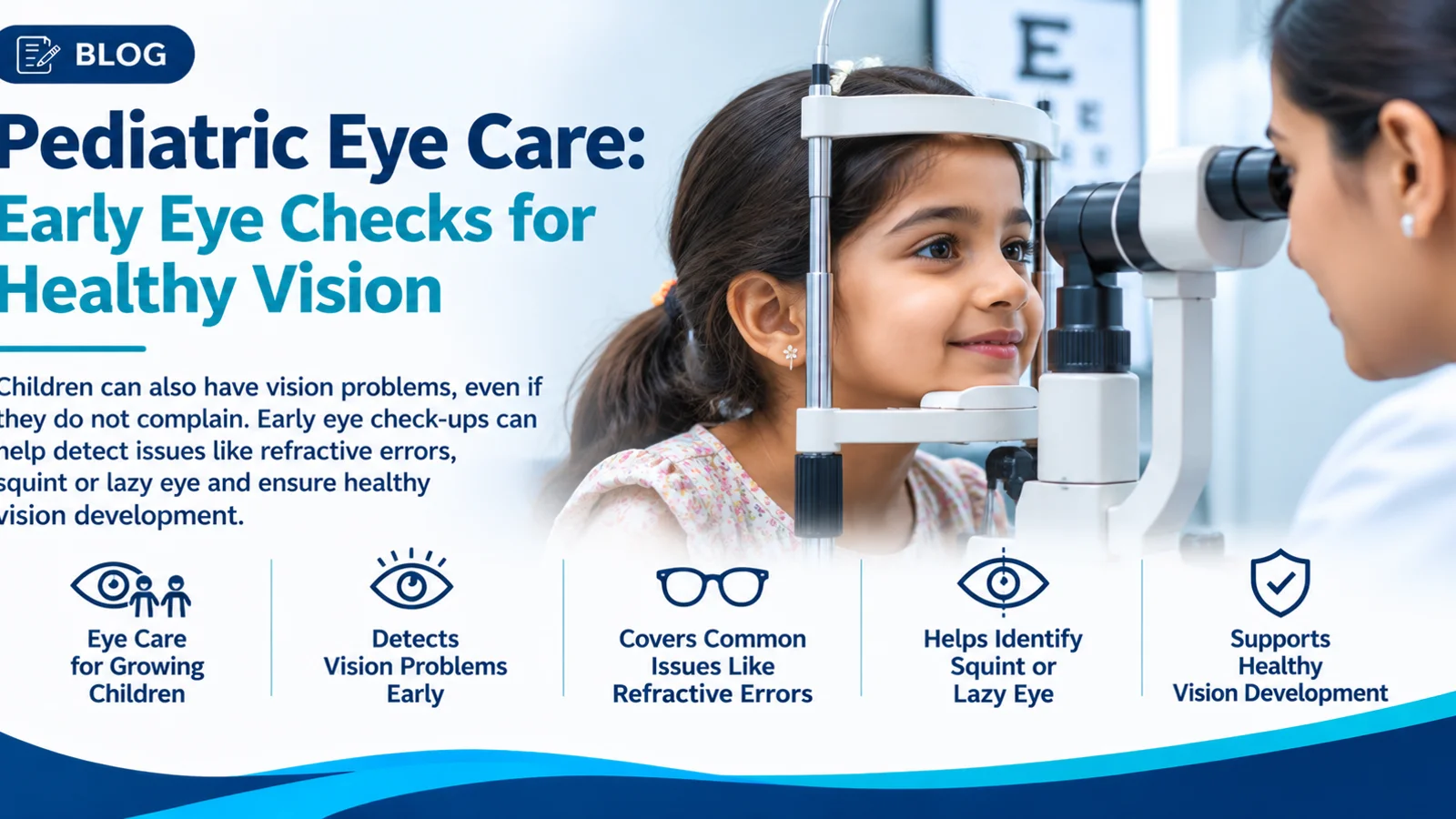
Why eye problems can be missed in children
A young child may assume everyone sees the world the way they do. They might not complain about blurry vision, particularly if one eye is seeing much better than the other. Vision problems can affect comfort, reading and everyday activities. Screening is valuable, but an ophthalmologist can investigate symptoms and abnormal screening results.
1. Squinting or closing one eye
A child who frequently narrows or closes one eye may be trying to see an object more clearly. This can happen for several reasons, including a refractive error, and deserves attention if it persists.
2. Frequent head tilting or a visible eye turn
Persistent head tilting, unusual face turning or an eye that appears to drift inward or outward may reflect eye-alignment concerns. A noticeable eye turn should be examined promptly rather than treated as a habit.
3. Holding books or screens very close
Sitting close to the television is not a diagnosis, but repeatedly bringing objects unusually close, especially along with squinting or school complaints, can be a useful reason to arrange a vision assessment.
4. Headaches or discomfort with near work
Some children report eye strain or headaches after reading or homework. These symptoms can have many causes, so an eye exam can help determine whether a vision issue contributes.
5. Losing place while reading or avoiding close work
Difficulty tracking a line of text, avoiding reading or complaining that words look blurry may warrant further evaluation. Not every learning difficulty is caused by eyesight, and an eye examination is only one part of understanding the concern.
6. Frequent eye rubbing or blinking
Rubbing and blinking may be related to irritation, allergy or other conditions. When these behaviours are persistent, accompanied by redness or discomfort, or combined with visual complaints, ask an eye specialist for advice.
7. A failed school vision screening
A screening suggests whether more assessment is needed; it does not replace a comprehensive eye examination when the child has symptoms, a known risk factor or an abnormal result.
When urgent evaluation matters
A white-looking pupil, sudden vision changes, significant eye pain, persistent redness or new severe light sensitivity should not be ignored. Seek prompt professional care. Shanti EyeTech in Indore lists pediatric eye examinations and assessment-led care; the ophthalmologist can advise which investigations or referrals are appropriate.
Next step
If you have questions about your vision or are considering an eye examination, contact Shanti EyeTech in Indore to discuss an appropriate evaluation. A consultation and examination are needed before any diagnosis or treatment decision.
Medical information is provided for general education and does not replace individual professional advice. Seek urgent ophthalmic care for sudden loss of vision, severe eye pain, or other acute symptoms.
Frequently Asked Questions
Does sitting close to the television always mean my child needs glasses?
No. It can be a clue but does not establish a diagnosis.
Is school eye screening enough?
Screening is useful, but symptoms or an abnormal result may require a comprehensive eye examination.
What if my child cannot read an eye chart?
Eye professionals can use age-appropriate methods to assess vision and eye health.
Was this article helpful?
The information is for educational purposes and does not replace professional medical advice, diagnosis or treatment.