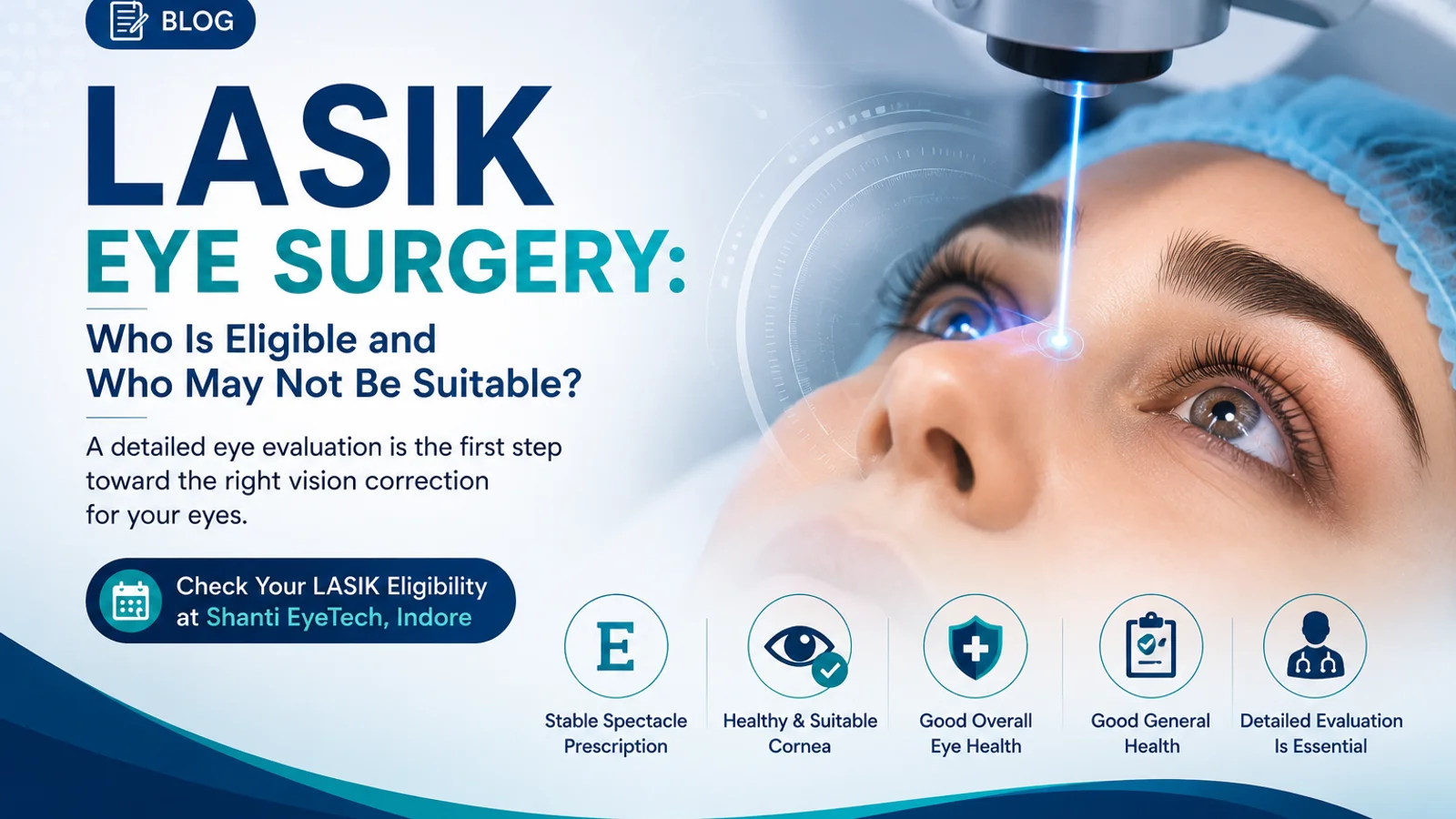
What Is LASIK?
LASIK is a laser vision-correction procedure that reshapes the cornea to correct refractive errors such as myopia, hyperopia and astigmatism.
The aim is to reduce dependence on glasses or contact lenses.
Who May Be Considered for LASIK?
- 1Age
Candidates should have reached an appropriate age for refractive surgery and have sufficiently stable eye development.
- 2Stable Spectacle Prescription
Frequent changes in spectacle power may indicate that the prescription has not stabilised sufficiently for a refractive procedure.
- 3Corneal Health
The shape and thickness of the cornea are important considerations. Detailed corneal measurements are therefore part of refractive-surgery assessment.
- 4Overall Eye Health
Conditions affecting the cornea, retina, optic nerve or other parts of the eye may influence whether LASIK is appropriate.
- 5General Health
Certain medical conditions, medications and other individual factors may also influence treatment suitability.
Who May Not Be Suitable for Standard LASIK?
LASIK may not be recommended for some patients with unsuitable corneal characteristics, unstable refractive power or certain eye or health conditions.
For example, people with keratoconus generally require a different approach because the cornea is already structurally abnormal.
Being unsuitable for LASIK does not necessarily mean that there are no other vision-correction options.
Are There Alternatives to LASIK?
Yes.
Depending on the patient’s eyes and refractive requirements, other options may be considered.
Shanti EyeTech’s Freedom From Glasses services include LASIK, PRK, SMILE, implantable collamer lenses (ICL), refractive lens exchange and other vision-correction approaches.
The appropriate option can only be determined after an eye evaluation.
Why Is a Pre-LASIK Evaluation Important?
Two people with the same spectacle power may have very different corneal thickness, shape, eye health and visual requirements.
A detailed evaluation helps the ophthalmologist determine:
Whether refractive surgery is appropriate
Whether the cornea is suitable
Which procedure may be considered
Whether another approach would be safer or more appropriate
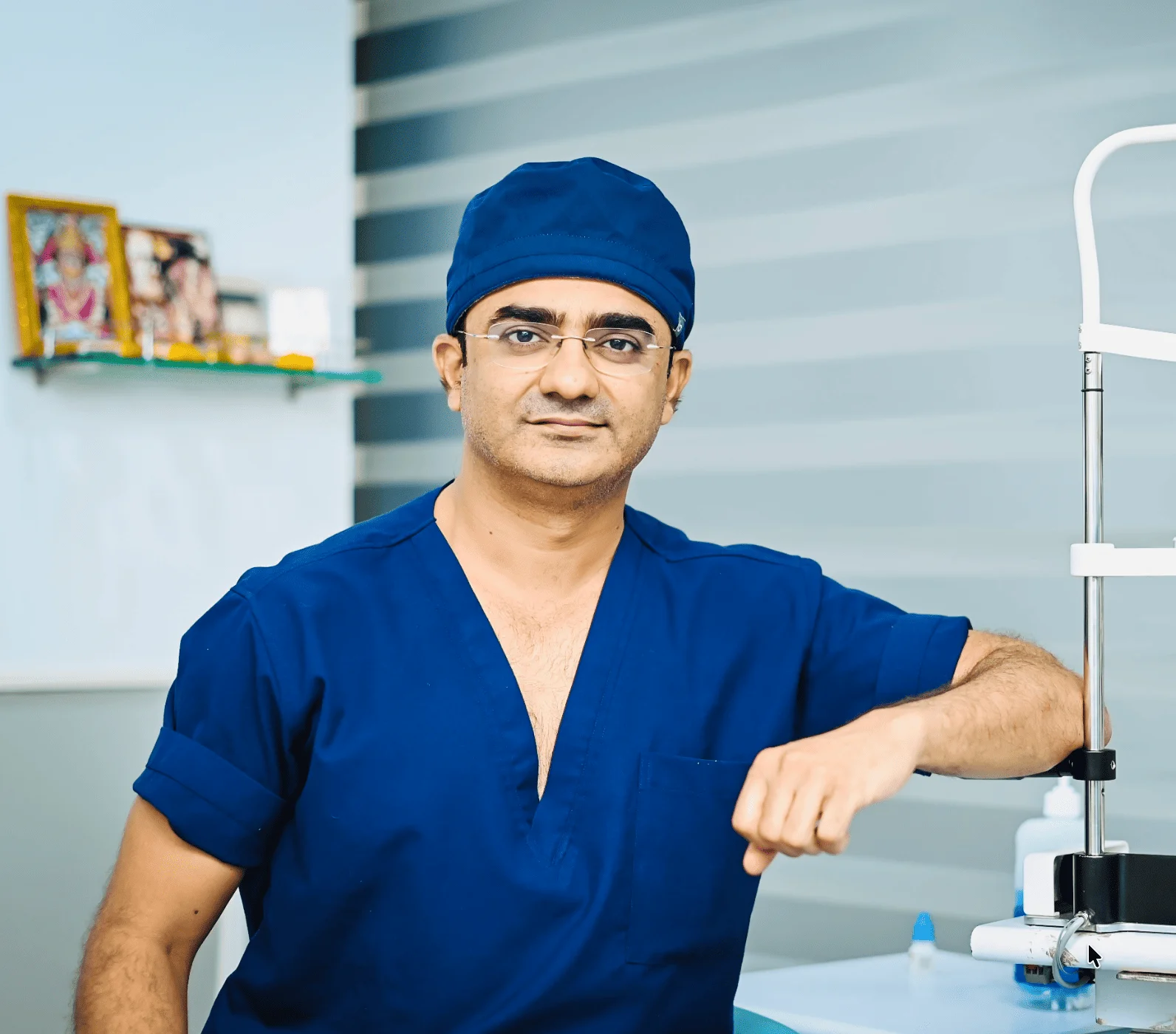
“Dr. Amit Solanki has been dedicated to the field of ophthalmology since 2003, amassing over 20 years of invaluable experience. He embarked on his journey by completing his undergraduate training (MBBS) followed by further postgraduate studies (MS) at the esteemed B.J. Medical College in Ahmedabad, Gujarat.”
The information is for educational purposes and does not replace professional medical advice, diagnosis or treatment.
Was this article helpful?
Subscribe to Newsletter
Get health tips.